October 4, 20268 min readHeating & Hydronics

In Southcentral Alaska, heating is not a seasonal luxury—it is a critical life-safety system that operates 8 to 9 months out of every year. When temperatures plunge below zero in December and January, your heating equipment works under intense thermal loads. If you are building a new home, renovating, or facing an expensive equipment replacement in Anchorage, Eagle River, or the Mat-Su Valley, the central question is almost always: should you choose a hydronic boiler or a forced-air furnace?
Both systems have passionate advocates, and each has clear operational advantages depending on your home's layout, existing distribution infrastructure, and indoor comfort priorities. Here is an honest, field-tested comparison from local heating technicians who service both systems through brutal Alaska winters.
How Each System Delivers Heat in Sub-Zero Temperatures
The fundamental difference between boilers and furnaces lies in the heat transfer medium: water versus air.
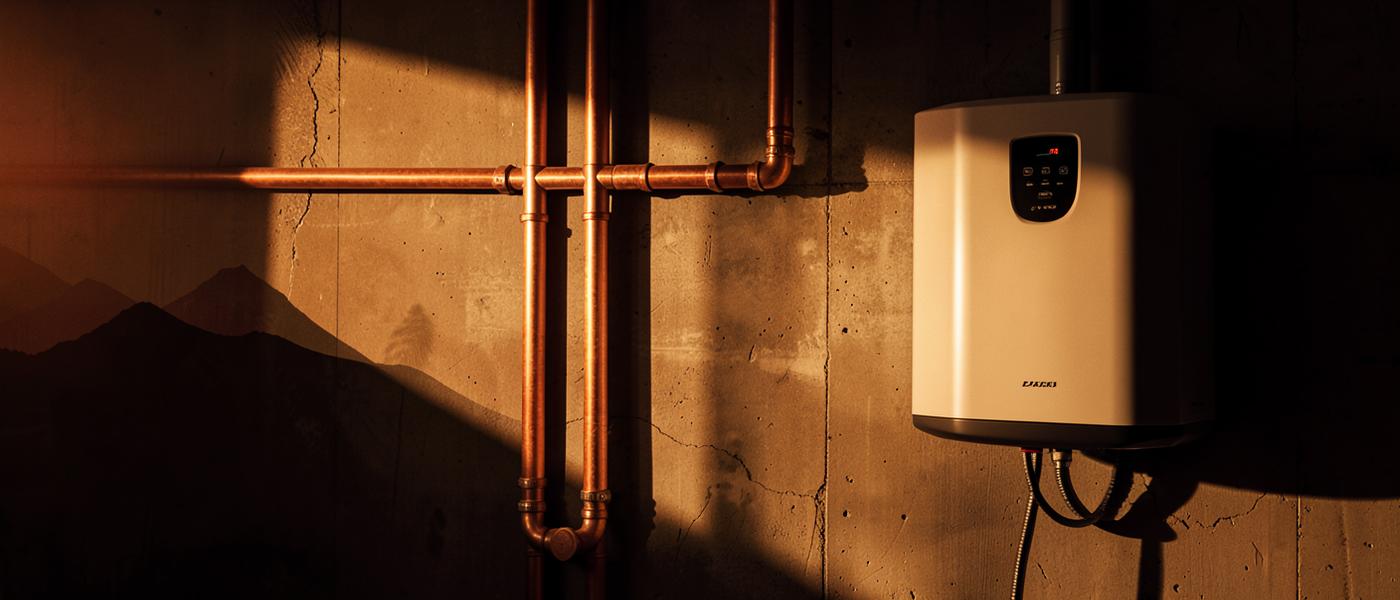
A hydronic boiler uses natural gas (or fuel oil) to heat water or a glycol-water antifreeze solution. Heavy-duty circulator pumps move this heated fluid through insulated copper or PEX piping to baseboard fin-tube convectors, cast-iron radiators, or in-floor radiant PEX loops. The heat radiates outward into objects and building materials, creating gentle, steady, draft-free thermal mass.
A forced-air furnace burns fuel inside a metallic heat exchanger, while an electric blower fan pulls indoor return air across the hot metal and pushes heated air through ductwork into living spaces. Furnaces cycle on and off relatively quickly, producing rapid blasts of hot air whenever the thermostat calls for heat.
Heating Efficiency & Monthly ENSTAR Fuel Bills
Modern condensing gas boilers and high-efficiency gas furnaces can both achieve 95% to 96% AFUE (Annual Fuel Utilization Efficiency) ratings at the burner. However, real-world efficiency delivered inside an Alaska home often favors hydronics due to ductwork thermal loss.
In many older Anchorage and Mat-Su homes, forced-air ductwork runs through unconditioned crawlspaces, unheated attics, or exterior soffits. Research by the Alaska Housing Finance Corporation (AHFC) indicates that leaky or uninsulated ducts can lose 15% to 25% of their heat before warm air reaches living spaces.
Hydronic piping, by contrast, has minimal surface area and is easily wrapped in high-R foam insulation. Furthermore, hydronic systems can be finely divided into multiple independent heating zones (e.g., bedrooms, living room, basement), preventing energy waste from overheating unused rooms.
Indoor Air Quality, Humidity & Winter Comfort
Comfort during an Alaska winter extends beyond temperature to indoor air moisture. Sub-arctic ambient air has near-zero moisture capacity, causing indoor relative humidity to plummet below 15% during deep winter freezes.
Forced-air furnaces exacerbate this problem by constantly circulating dry, high-velocity air, stirring up dust, pet dander, and allergens through ductwork. Many homeowners report dry skin, nosebleeds, and sinus irritation in forced-air homes unless whole-home steam humidifiers are meticulously maintained.
Hydronic heating does not move air. It creates virtually no drafts, operates almost silently, and does not scorch airborne particles. Because radiant heat warms the floor and walls first, heat remains where people live rather than immediately rising to stratify near high ceilings.
Freeze Vulnerability & Winter Storm Resilience
One major advantage of forced-air furnaces in Alaska is freeze resilience during power outages. Because a furnace contains no standing water, an extended power outage or burner lockout will make the house cold, but the furnace itself will not burst or suffer mechanical damage.
Hydronic systems, on the other hand, contain fluid. In older Anchorage homes with straight water in baseboard loops, a prolonged winter freeze-up or furnace failure can result in frozen baseboard pipes that burst and flood the property upon thawing.
To eliminate this risk, modern Alaska boiler installations utilize an engineered closed loop filled with 35% to 50% non-toxic propylene glycol antifreeze with corrosion inhibitors. A glycol-charged hydronic loop provides burst protection down to -35°F or -50°F, safeguarding your heating infrastructure even during severe winter emergency shutdowns.
Equipment Replacement Costs & Expected Lifespan
Upfront cost is where forced-air furnaces generally have the advantage:
• High-Efficiency Gas Furnace Replacement: Typically ranges from $5,500 to $9,500 installed in Anchorage, including direct-vent PVC piping, gas line reconnection, and electrical hookup.
• High-Efficiency Condensing Boiler Replacement: Typically ranges from $9,000 to $16,500 installed, reflecting the complexity of multi-zone circulator pumps, expansion tanks, air separators, backflow preventers, and glycol feeding systems.
However, hydronic boilers offer superior longevity. A quality condensing boiler typically lasts 20 to 25 years (and classic cast-iron boilers can last 30+ years with proper water quality maintenance), whereas the average forced-air furnace heat exchanger reaches end-of-life in 15 to 20 years under heavy Alaskan heating runtime.
The Final Verdict: Which System Should You Choose?
Choose a Hydronic Boiler if: You prioritize silent, draft-free radiant comfort, even room-by-room zone control, desire in-floor radiant heating or snow-melt integration, and want equipment engineered for maximum 25+ year durability.
Choose a Forced-Air Furnace if: Your home already has a well-designed ductwork system in conditioned space, you want a lower upfront equipment replacement budget, or you wish to integrate central whole-house air filtration, heat recovery ventilators (HRVs), or summer air conditioning.
Need this handled rather than explained?
Call (877) 570-8952Related Commercial & Field Services
High-efficiency condensing boilers, zone valve diagnostics, and glycol antifreeze recharging.
Emergency furnace repair, heat exchanger safety inspections, and high-efficiency upgrades.
In-slab hydronic tubing design, manifold installations, and snow melt systems.
Interactive Sizing & Diagnostic Calculators
View itemized labor rates, equipment allowances, and neighborhood dispatch estimates in our comprehensive guide.