Natural Gas Line Repair & Installation in Anchorage, AK
Natural gas powers the boilers, furnaces, and water heaters that sustain Anchorage homes through sub-zero winters. Our expert gas technicians deliver safe, code-compliant gas piping repair, leak location, standby generator gas sizing, appliance hookups, and automatic earthquake shutoff valve installations across Anchorage, Eagle River, and Chugiak.
What to Do If You Smell Natural Gas
Natural gas contains an added odorant (mercaptan) that smells like rotten eggs or sulfur. If you smell gas, hear a hissing pipe, or suspect an active leak, prioritize immediate personal safety:
- Evacuate Immediately: Get all people and pets out of the building at once.
- Do Not Touch Electrical Switches: Do NOT turn lights on or off, unplug appliances, or open garage doors. Even a microscopic electrical spark can ignite gas.
- Do Not Use Phones Inside: Leave your phone in your pocket until you are well away from the structure.
- Call ENSTAR & 911: From a safe distance outside, call ENSTAR's 24-Hour Emergency Line at 1-844-SMELL GAS (1-844-763-5542) or dial 911 immediately.
- Call 907 Heating & Plumbing for Repairs: Once ENSTAR or the fire department has isolated the gas and declared the structure safe, call us at (877) 570-8952 to execute code-compliant pipe repairs and air-pressure testing.
Certified Gas Piping Services for Safety, Comfort & Winter Reliability
Working on pressurized natural gas lines requires strict adherence to Municipality of Anchorage (MOA) mechanical codes, precision threading, and mandatory pressure testing.
Gas Leak Detection & Pressure Testing
We trace pinhole leaks along iron threads and valves using electronic combustible gas sniffers and certified bubble solutions. Following repair, we conduct mandatory 10 PSI air-testing.
Boiler & Furnace Gas Lines
High-output heating plants require proper pipe diameter sizing (3/4" to 1-1/4") to prevent gas starvation and burner lockouts during the coldest sub-zero winter cold snaps.
Standby Generator Gas Sizing
Whole-home backup generators demand 200,000 to 350,000 BTU/hr. We trench dedicated underground HDPE gas runs with copper tracer wire to ensure your generator runs without starving indoor heat.
Gas Range & Dryer Hookups
Converting from electric to natural gas? We install rigid black iron drops, manual brass shutoff ball valves, sediment traps (drip legs), and code-approved flexible connectors.
Garage Unit Heater Gas Piping
Transform freezing detached garages and workshops into warm workspaces. We run overhead gas piping to feed suspended high-output natural gas unit heaters safely.
Automatic Seismic Gas Valves
Anchorage sits in Seismic Zone 4. We install mechanical earthquake shutoff valves on your exterior meter riser that snap shut during a magnitude 5.4+ earthquake to stop gas fires.
Understanding the ENSTAR Utility Boundary vs. Homeowner Responsibility
Many homeowners are surprised to learn that ENSTAR's maintenance responsibility ends at the gas meter outlet. Everything past the meter is private customer piping.
| Piping System Segment | Responsible Entity | Scope of Responsibility |
|---|---|---|
| Street Mains & Service Riser | ENSTAR Natural Gas | Main lines beneath roadways and the pipe rising from the ground up to the meter. |
| Gas Meter & Regulator | ENSTAR Natural Gas | The utility meter, utility shutoff lock, and high-pressure service regulator. |
| Meter Outlet Threads | Demarcation Line | Utility responsibility ends at the meter outlet discharge connection. |
| House Main & Branch Lines | Property Owner / 907 Heating | All interior Schedule 40 black iron pipe, CSST, and crawlspace distribution lines. |
| Underground Generator/Garage Lines | Property Owner / 907 Heating | Private underground polyethylene yard lines buried from the meter to detached buildings. |
| Appliance Valves & Connectors | Property Owner / 907 Heating | Manual shutoff ball valves, sediment traps, flexible appliance whips, and burner fittings. |
Safe, Durable Gas Piping Materials for Sub-Arctic Alaska
We select heavy-duty piping materials engineered to withstand ground movement, cold temperatures, and continuous thermal cycling:
Threaded Black Steel Iron (Schedule 40)
The gold standard for mechanical rooms and exposed runs. Maximum structural strength, rigidity, and resistance to accidental impact.
Corrugated Stainless Steel Tubing (CSST)
Continuous flexible tubing with protective jackets that snakes through floor joists with minimal fittings. Proper electrical bonding is strictly enforced to prevent surge arcing.
Underground Polyethylene (HDPE) Gas Pipe
Used exclusively for buried exterior runs to standby generators and heated garages. Never corrodes in moist Alaskan soils; buried with insulated copper tracer wire.
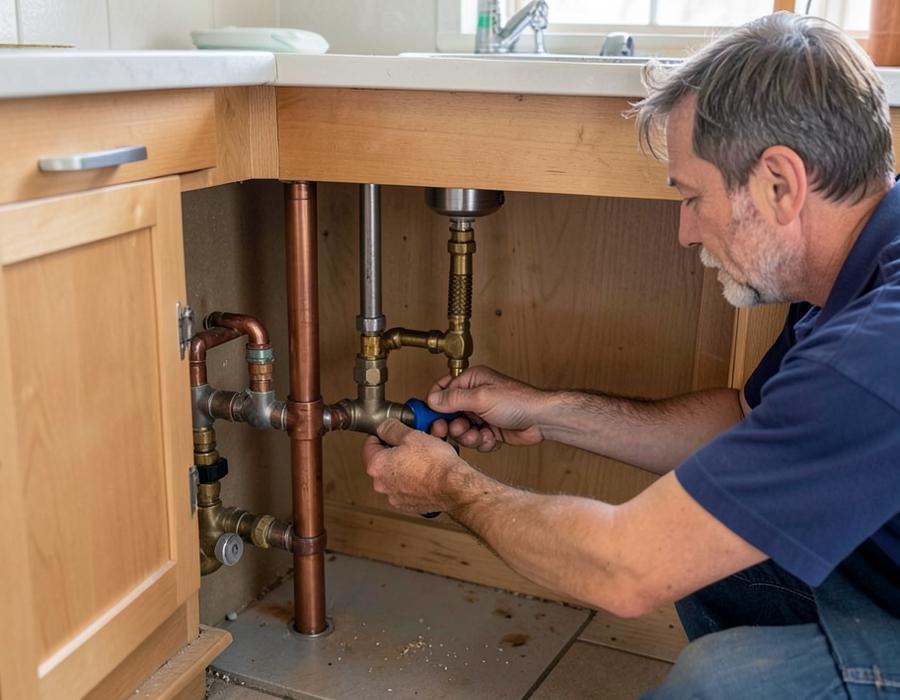
Automatic Seismic Gas Shutoff Valves
Protect your property against post-earthquake fires. In the event of a magnitude 5.4+ quake, an internal gravity ball snaps shut, cutting gas flow into your home instantly before damaged interior pipes can cause a fire.
Interactive Gas Line Installation & Extension Cost Calculator
Estimate material and labor costs for interior Schedule 40 black pipe extensions, CSST flexible runs, and underground trenching for standby generators or heated garages in Anchorage and the Mat-Su Valley.
Gas Appliance Electrical Diagnostics
Learn how technicians test gas valve solenoids, multi-meter resistance, and electric pilot interlocks.
Related Natural Gas Mechanical Services
Certified Gas Piping Service Areas
We pull municipal permits, coordinate with ENSTAR Natural Gas, and handle air-pressure tests across Southcentral Alaska:
Anchorage Hillside
Long lateral runs, standby generator gas sizing, and whole-home dual-fuel transitions.
Turnagain & West Anchorage
Seismic shutoff valve upgrades, coastal earthquake retrofits, and gas manifold modernization.
Palmer, AK
ENSTAR service expansion lines, agricultural shop heaters, and residential gas lines.
Wasilla, AK
Detached garage heater gas drops, trenching for backup generators, and new construction.
Anchorage Gas Line FAQ
Clear answers regarding natural gas piping, safety regulations, and emergency procedures.
- Who is responsible for repairing a gas leak in Anchorage: Enstar or a plumber?
- ENSTAR is responsible for the gas main in the street and the service riser up to the discharge side of your gas meter. If a leak occurs anywhere downstream of the meter outlet—including inside your house, in your crawlspace, or on piping running to appliances—it is the homeowner's responsibility to hire a qualified mechanical plumbing contractor to perform the repairs, pull required MOA permits, and conduct code-mandated pressure testing.
- What is an automatic seismic gas shutoff valve?
- An automatic seismic gas shutoff valve (earthquake valve) is a mechanical safety device installed on your exterior gas riser directly after the meter. During a significant earthquake (magnitude 5.4 or higher in Anchorage), an internal stainless-steel sphere is displaced by the seismic shockwaves, dropping down to seal the gas line and instantly stopping fuel flow into your home. This prevents post-earthquake gas leaks, explosions, and fires if interior pipes break.
- How much gas capacity does a standby backup generator require?
- Residential standby generators (such as 18kW to 26kW units) require substantial natural gas volume—typically between 200,000 and 350,000 BTU/hr under full electrical load. To maintain this volume without starving your indoor boiler or furnace, a dedicated gas line (typically 1-inch to 1-1/4-inch pipe diameter, depending on length) must be run from the meter to the generator. In many cases, we coordinate with ENSTAR to install a higher-capacity gas meter.
- How do you test a gas line after completing a repair?
- Following any gas line installation or repair, our technicians isolate the section, cap all open ends, and pressurize the line with compressed air to at least 10 PSI using a calibrated diaphragm pressure gauge. The line must hold steady pressure without dropping for a designated duration. Once the air test is verified and signed off by the local mechanical inspector, the line is safely re-energized with natural gas.
Need a Plumber or Heating Expert Right Now?
Call us anytime for fast, reliable service.
(877) 570-8952- No Overtime Charges for Emergencies
- Live Emergency Support
- Quick Response
$25 OFF
Your First Service
Use Code: 907SAVE
Don't wait until a small plumbing or heating problem becomes a big repair. Book your service today.
Book Your Service Now