Water Heater Repair Services in Anchorage, AK
907 Heating and Plumbing provides 24/7 water heater repair, diagnostics, and replacement evaluations in Anchorage, Alaska and surrounding communities within a 50-mile radius. Available day and night for gas and electric storage-tank systems, our technicians resolve no-hot-water emergencies, fix external plumbing leaks, and replace failed heating components with no extra charge for nights or weekends. Call (877) 570-8952.
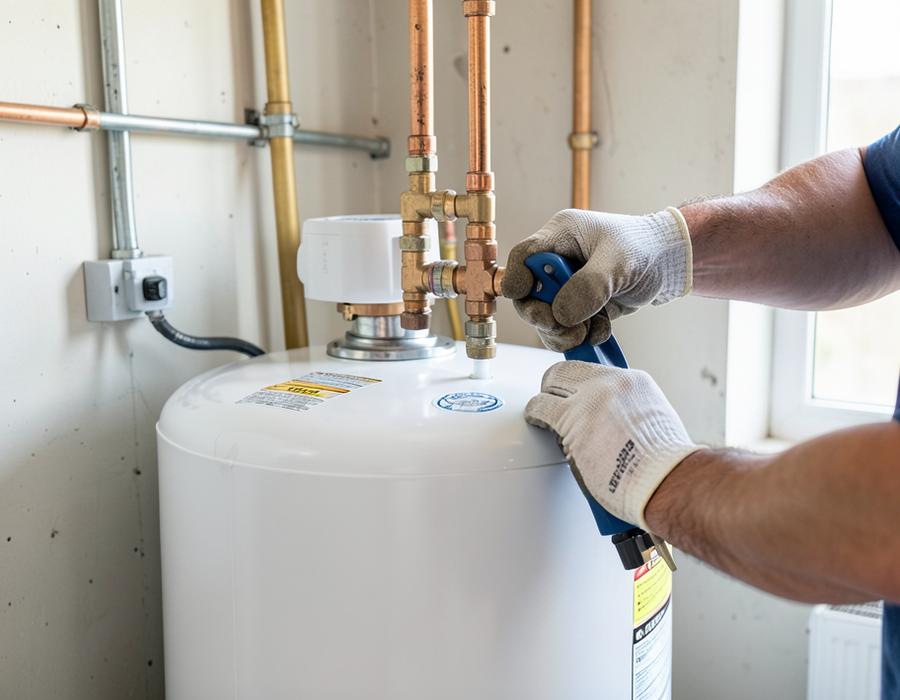
What to Do If Your Water Heater Is Leaking
When water pools around your tank or drips from connected valves, taking simple, low-risk safety steps helps protect your home from water damage before a technician arrives:
- 1Stop Using Hot Water: Turn off hot water faucets and appliances. Ceasing hot water draw prevents additional cold water from entering the tank under supply pressure.
- 2Keep Clear of Electrical Hazards: Never step into pooled water or touch equipment if water has reached power outlets, wiring, or electrical connections.
- 3Isolate the Water Supply if Safely Accessible: If a clearly labeled shutoff valve on the cold water pipe directly above the tank is safely accessible without crossing standing water, turn it clockwise to stop incoming water flow.
- 4If You Smell Gas, Evacuate: If a gas odor (rotten eggs) is present, do not operate switches or phones inside the building. Leave the building right away and contact your local gas utility or emergency responders from a safe distance.
- 5Call for 24/7 Professional Service: Contact our dispatch team at (877) 570-8952. Our technicians provide diagnostic inspection, component repair, and replacement evaluations across Anchorage with no extra charge for nights or weekends.
Signs You Need Professional Water Heater Service
Water heaters often display early symptoms of component wear before failing completely. Recognizing these signs early helps address mechanical issues before total loss of hot water occurs:
No Hot Water or Lukewarm Flow
Water that stays cold or runs out within a couple of minutes may indicate an extinguished gas pilot, a failing thermocouple, or a burned-out electric heating element requiring professional testing.
Temperature Fluctuations
Water that unpredictably cycles between scalding and cold can be associated with thermostat calibration drift, faulty high-limit switches, or mineral scale interfering with internal temperature sensing.
Visible Water Pooling or Weeping
Moisture around the tank base, on surrounding flooring, or dripping from pipe fittings requires inspection to determine whether a repairable valve or a breached tank shell is responsible.
Popping or Rumbling Noises
Popping, banging, or boiling sounds inside the tank typically indicate mineral sediment accumulation along the tank bottom, which traps steam pockets and reduces heating efficiency.
Discolored or Rusty Hot Water
Water that runs reddish-brown or smells metallic only on the hot side may indicate accelerated internal tank oxidation or complete depletion of the tank's sacrificial anode rod.
Pilot Light or Ignition Difficulties
A gas pilot flame that refuses to stay lit, flickers yellow, or extinguishes frequently during windy conditions often points to a worn thermocouple, dirty burner orifice, or venting draft imbalance.
Repairable Water Heater Leaks vs. Tank Ruptures
Not every leaking water heater requires a brand-new unit. The source of the leak determines whether a straightforward component repair is appropriate or if tank replacement is necessary:
Valves, Fittings & Connections
Leaks originating from external plumbing connections can typically be repaired without replacing the water heater tank:
- •Loose or corroded cold water inlet or hot outlet pipe nipples
- •Temperature & Pressure (T&P) relief valve weeping or dripping
- •Leaking lower brass drain valve or worn valve washers
- •Dripping flexible water supply connector lines
Corroded Tank Shell or Seams
When water emerges from the bottom rim, outer jacket seams, or through insulation, it frequently indicates an internal tank breach:
- •Internal glass lining may have cracked or deteriorated from age and thermal cycling
- •Pressurized water penetrating the steel vessel cannot be safely welded or patched
- •A physical inspection verifies whether moisture is external fitting runoff or true tank failure
- •If an internal breach is confirmed, equipment replacement is necessary to prevent flooding
Gas & Electric Water Heater Repair Services
907 Heating and Plumbing services both natural gas and electric conventional storage-tank systems commonly found in Anchorage homes and commercial properties:
Gas water heaters rely on precise fuel delivery, proper combustion venting, and reliable safety controls:
- Thermocouple, thermopile, and flame-sensor diagnostic testing
- Pilot assembly clearing and electronic ignition repair
- Gas control valve diagnosis and replacement
- Combustion air intake and exhaust draft venting checks
Electric units utilize immersion heating elements and dual thermostats to maintain stored water temperature:
- Upper and lower resistive heating element testing and replacement
- Upper and lower thermostat calibration and replacement
- High-limit safety switch testing and reset evaluation
- Internal wiring and terminal inspection
We service common residential and commercial water heater brands found across Anchorage, including Rheem, Bradford White, A.O. Smith, and State systems.
Repair or Replace? How to Decide
When a water heater malfunctions, homeowners often ask whether paying for a repair makes good financial sense or if replacing the unit is the more sensible long-term decision. Consider these practical factors:
When Repair May Be Appropriate
- The tank body is completely sound with no signs of seam corrosion
- The problem involves an isolated component like a thermocouple or element
- The unit has a reliable service history and parts are readily available
When Replacement May Be Appropriate
- Water is leaking directly from the bottom seam or outer jacket of the tank
- The equipment has experienced repeated major breakdowns
- Estimated repair expenses represent a substantial portion of replacement value
Anchorage Climate & Local Plumbing Considerations
Water heaters in Anchorage operate in challenging conditions compared to warmer climates. Several local factors influence water heater performance, safety, and longevity:
Cold Groundwater & Winter Demand
During Southcentral Alaska winters, cold incoming water from municipal mains and bedrock wells requires substantial heating effort to achieve comfortable household delivery temperatures. This increased thermal demand places steady stress on gas burners and electric heating elements throughout the winter months.
Closed Plumbing Systems & Thermal Expansion
Some closed plumbing systems require thermal-expansion control when heated water cannot expand back toward the water supply due to check valves, backflow preventers, or pressure regulators. In these configurations, an approved thermal expansion tank helps absorb pressure increases, protecting household fixtures and preventing relief valve weeping.
Anchorage Seismic Restraint Considerations
Anchorage is located in an active seismic region. Water heater installations require approved seismic strapping anchored to structural wall framing along with flexible supply connectors to help prevent tank tipping, pipe rupture, and gas leaks during seismic events.
Dedicated Systems: Tankless, Commercial & Hydronic Options
While conventional storage tanks serve most residential needs, properties with unique hot-water demands may benefit from specialized systems:
Tankless Water Heaters
On-demand, tankless water heating systems provide continuous hot water and compact wall-hung efficiency.
Commercial Hot Water
Heavy-duty, high-recovery water heating solutions for Anchorage restaurants, apartments, and commercial facilities.
Boiler Indirect Water Tanks
Domestic hot water generated via indirect coils connected to central hydronic boiler heating systems.
24/7 Water Heater Service Serving Anchorage & 50-Mile Radius
Our technicians provide reliable water heater repair and replacement evaluations throughout the Municipality of Anchorage and neighboring communities:
Water Heater Sizing & Diagnostics Calculators
Interactive tools engineered for Anchorage's 34°F winter groundwater temperatures:
Water Heater Sizing Calculator
Determine optimal gallon capacity and first-hour rating (FHR) based on bathroom count and household hot water usage.
Thermal ExpansionThermal Expansion Tank Sizing
Calculate required expansion tank size to prevent relief valve leakage and high pressure spikes in closed plumbing systems.
Freeze DefenseCold Inlet Freeze Calculator
Model freeze timing for cold-water feed pipes running through unheated crawlspaces or exterior foundation walls.
Cost EstimationWater Heater Replacement Cost Tool
Estimate operating costs and replacement budgeting for gas vs. electric water heaters in Southcentral Alaska.
Water Heater Diagnostic & Care Guides
Expert troubleshooting articles for Anchorage homeowners facing hot water issues:
No Hot Water in Anchorage? Diagnostic Guide
Step-by-step diagnostic checklist for pilot light outages, tripped breakers, failed thermocouples, and burner faults.
Failure SignsWater Heater Warning Signs
Recognize rumbling sediment noises, rust-colored water, pressure relief valve weeping, and early tank failure symptoms.
Equipment LifespanHow Long Do Water Heaters Last in Alaska?
Why Anchorage's cold inlet water and dissolved minerals impact anode rod life and tank longevity over time.
Freeze PreventionPreventing Frozen Pipes in Winter
Safeguarding utility rooms, uninsulated crawlspaces, and cold water supply feeds during sub-zero cold snaps.
Frequently Asked Questions About Water Heater Repair in Anchorage
- Why is my water heater not producing hot water?
- For natural gas water heaters, an extinguished pilot light, worn thermocouple, faulty flame sensor, or gas control valve issue is commonly responsible. For electric water heaters, a tripped high-limit safety reset button on the thermostat or a burned-out upper or lower heating element is typically the cause. Professional diagnostic testing determines the exact component failure so appropriate repairs can be performed.
- Is a leaking water heater urgent?
- Yes. A leaking water heater can cause water damage to flooring, subflooring, and finished spaces, and can present safety hazards if water reaches electrical connections. If you observe active leaking, keep away from pooled water near electrical equipment, shut off the cold water supply valve if it is safely accessible, and contact our 24/7 service team at (877) 570-8952.
- Can a leaking water heater be repaired?
- Whether a leak can be repaired depends on its origin. External leaks from threaded pipe fittings, dielectric connections, a leaking Temperature and Pressure (T&P) relief valve, or a drain valve can usually be repaired by replacing the damaged valve or fitting. However, if water emerges from the bottom seam or outer jacket of the tank, it often indicates internal shell corrosion, which typically requires equipment replacement once confirmed by physical inspection.
- How do I know whether to repair or replace my water heater?
- The decision to repair or replace depends on equipment condition, the nature of the failure, parts availability, and the age of the tank. If an otherwise sound water heater has a single failed electrical element, thermostat, or valve, repair may be appropriate. If the tank shell itself is leaking, or if an older unit requires repeated major repairs, equipment replacement is often the more reliable choice. We provide free quotes on equipment replacements.
- Do you repair both gas and electric water heaters?
- Yes. 907 Heating and Plumbing diagnoses, services, and repairs both natural gas and electric conventional storage-tank water heaters across residential and commercial properties in Anchorage.
- Do you charge extra on nights or weekends?
- No. 907 Heating and Plumbing provides 24/7 emergency service with no extra charge for nights or weekends throughout Anchorage and our 50-mile service radius.
Need Help With a Water Heater Problem in Anchorage?
Whether your water heater has left your home with cold water, makes unusual rumbling noises, or has developed a leak, our local technicians are on call 24 hours a day to diagnose and resolve your hot-water issues safely.
$25 OFF
Your First Service
Use Code: 907SAVE
Don't wait until a small plumbing or heating problem becomes a big repair. Book your service today.
Book Your Service Now