
Pipe Repair & Replacement in Anchorage, AK
907 Heating and Plumbing provides professional pipe repair and localized sectional replacement for domestic water supply lines in Anchorage, Alaska and surrounding communities within a 50-mile radius. When plumbing lines leak, split, or corrode, our technicians execute code-compliant repairs and pipe transitions to restore water service safely. Call (877) 570-8952.
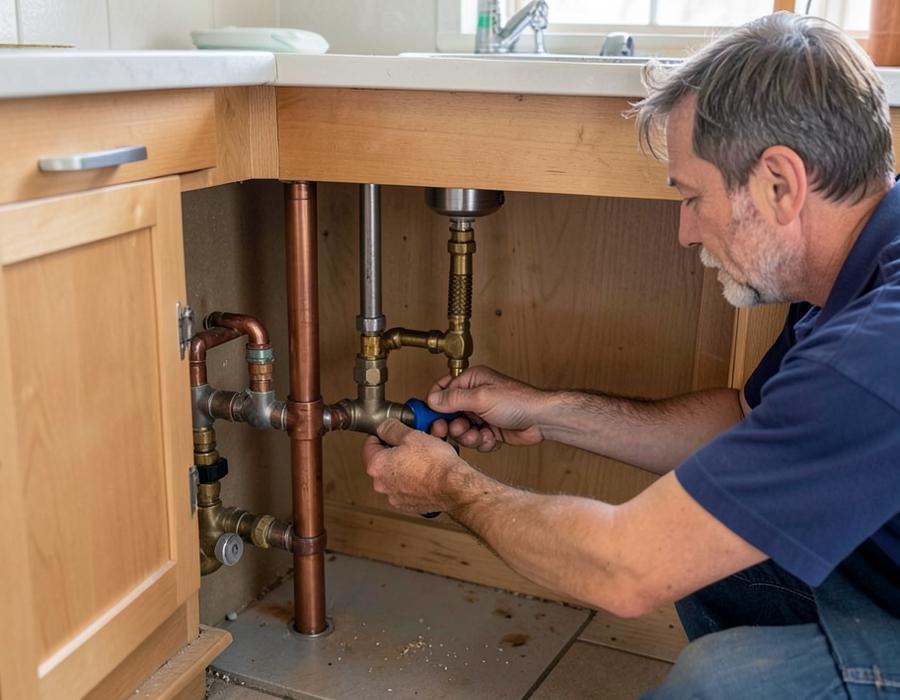
Safe Steps When You Discover a Leaking or Broken Pipe
When water escapes from a plumbing pipe, taking low-risk protective steps helps limit property damage while professional repair is arranged:
- Stop Using Affected Fixtures: Stop using the fixture, appliance, or branch connected to the leaking line if possible.
- Isolate the Water Supply if Safe: If significant water is escaping and a normal indoor shutoff is safely accessible without entering a hazardous area, the water supply may be isolated.
- Stay Clear of Electrical Hazards: If water is near outlets, wiring, appliances, or electrical panels, keep away from the area and contact appropriate emergency or electrical professionals.
- Protect Personal Belongings: Move valuables only if it can be done safely without exposure to electrical hazards or water-saturated ceilings.
- Call Professional Plumbing Dispatch: Contact 907 Heating and Plumbing at (877) 570-8952 for physical pipe repair and localized line restoration.
Visible Pipe Leak or Hidden Water Leak?
Determining whether your plumbing issue is visible or concealed helps identify the appropriate service path:
Visible & Confirmed Pipe Leaks
If water is visibly dripping from an exposed pipe section, valve connection, or fitting, diagnostic locating is not needed. This page handles the physical repair or localized replacement of the identified pipe.
- Dripping pipe connections under sinks or vanities
- Visible corrosion or pinhole sprays on exposed copper
- Cracked fittings or physical fractures in basement runs
Concealed & Hidden Leaks
If there are signs of water damage inside a wall or ceiling but the exact plumbing source cannot be seen, diagnostic leak detection is necessary before opening building materials.
- Moisture stains expanding on finished drywall or ceilings
- Unexplained increases in monthly municipal water usage
- Warm patches on floors or running water sounds in walls
Common Plumbing Pipe Problems We Repair
Plumbing supply lines can experience physical damage, joint failure, or localized wear over years of service. Common conditions our technicians evaluate include:
Leaking Pipe Sections
Localized pipe leaks can occur along straight runs or near connection points due to mechanical stress, age, or physical wear. Technicians inspect the affected line to determine whether a localized repair or sectional replacement is appropriate.
Cracked or Split Pipes
Physical impacts, settling, or freezing conditions can crack rigid piping or split fittings. Replacing the fractured segment restores normal water containment and line stability.
Pinhole Leaks in Copper
An isolated pinhole leak in copper piping can often be addressed by removing the affected section. Recurring pinholes across different areas, however, can suggest broader wall thinning that warrants wider evaluation.
Failing Fittings & Connections
Plumbing elbows, tees, couplings, and threaded adapters can loosen, corrode, or crack over time. Replacing compromised fittings eliminates active seepage at joint interfaces.
Domestic Water Pipe Materials We Service
Our technicians service common domestic water supply piping materials found across residential and light commercial properties in Anchorage:
Copper Water Lines
Common in residential and commercial supply systems. Technicians repair copper sections using code-compliant soldering or approved mechanical connections.
PEX Water-Supply Piping
Modern flexible water lines commonly used in residential construction and retrofits. Technicians install approved code-compliant fittings for reliable localized repairs.
Galvanized Steel Supply Lines
Some older properties contain aging metal supply piping. Damaged galvanized sections are replaced with modern materials using approved dielectric transition fittings.
CPVC & Transition Plumbing
Depending on accessibility and condition, technicians service CPVC lines using compatible fittings or transition damaged runs to modern PEX tubing.
Note: This service covers pressurized domestic potable water supply pipes. For drain, waste, vent, or sewer line repairs, visit our drain cleaning and sewer service pages.
Code-Compliant Pipe Repair Methods
Professional pipe repair involves careful inspection, precise cutout, and durable reconnection:
Clean Sectional Cutout
Technicians cleanly remove the compromised section of pipe, preparing smooth, properly sized ends to maintain proper water flow characteristics.
Localized Copper Pipe Repair
Code-compliant soldering methods provide a durable bond for copper supply lines, completed with proper safety shielding in framed spaces.
Mechanical Connection Methods
Depending on pipe material, access, and condition, an appropriate code-compliant connection method may be selected to join pipe sections without open flames.
Dissimilar Metal Transitions
When connecting copper or PEX to older galvanized steel lines, technicians install approved dielectric unions or brass transition fittings to isolate dissimilar metals from galvanic corrosion.
Spot Repair vs. Sectional Replacement
Understanding the scope of a pipe issue helps determine whether a localized fix or a longer section replacement is the practical choice:
Localized Spot Repair
Suitable when damage is restricted to a single fitting, valve, or small isolated puncture, and the surrounding pipe run exhibits sound wall thickness and healthy joints.
- • Isolated fitting leak or loose solder joint
- • Single pinhole in otherwise clean copper
- • Surrounding line is in good physical condition
Sectional Pipe Replacement
Recommended when physical damage, corrosion, or pitting extends across several feet of pipe, or when multiple connections along the same run show signs of weakness.
- • Freeze-split affecting an extended length
- • Multiple compromised connections along one run
- • Transitioning an entire accessible run to modern PEX
When a Local Pipe Repair May Not Be Enough
While localized repairs resolve isolated failures, continually patching a plumbing system with widespread deterioration can lead to repeated water damage and escalating repair costs:
- Recurring Leaks in Multiple Rooms: If pinhole leaks or joint failures appear repeatedly in different areas of your home, the pipe walls may be thinning system-wide.
- Widespread Corrosion & Low Flow: Aging galvanized steel lines can build up internal rust scale that severely constricts water flow and discolors water across multiple fixtures.
- Aging Legacy Piping Materials: Systems with legacy piping materials or widespread deterioration often benefit from full distribution replacement.
If your property experiences recurring plumbing failures, our team can evaluate the entire system to discuss whether full distribution repiping provides a more cost-effective long-term solution. Visit our whole-house repiping service for comprehensive replacement information.
Anchorage Environmental Factors & Pipe Health
Plumbing systems in Southcentral Alaska face unique environmental factors that can influence pipe performance and joint durability:
Sub-Zero Temperatures & Freeze Stress
Lines routed through unconditioned crawlspaces, cantilevers, or exterior wall cavities can be vulnerable to freezing during cold weather. If a pipe has suffered freeze damage, visit our dedicated frozen pipe repair service for thawing and line stabilization.
Ground Movement & Structural Stress
Ground movement can contribute to mechanical stress on piping and connections, particularly where rigid lines enter foundation walls or travel beneath building structures.
For properties connected to the Anchorage Water and Wastewater Utility (AWWU), maintenance responsibility is generally divided at the curb stop keybox near the property line. AWWU maintains the public main up to the keybox, while the property owner is responsible for the private water service line extending into the building. Under utility rules, only authorized utility personnel may operate the keybox valve.
If water is leaking around a water heater tank or temperature and pressure valve, visit our dedicated water heater repair service.
Serving Anchorage & Surrounding Communities
Our plumbing technicians dispatch across the Anchorage Bowl and surrounding communities within our 50-mile service radius:
Frequently Asked Pipe Repair Questions
Common questions about plumbing pipe repair, sectional replacement, and system maintenance in Anchorage:
- Can a leaking pipe be repaired without replacing the whole plumbing line?
- Yes. If the surrounding pipe is structurally sound and free from widespread deterioration, an isolated leak can often be repaired by removing the damaged section and installing a code-compliant replacement segment of copper or PEX tubing.
- What is the difference between pipe repair and water leak detection?
- Leak detection is the diagnostic process of locating a concealed leak inside walls or floors when the water source is unknown. Pipe repair is the subsequent physical work of accessing the pipe, cutting out damaged sections, and installing replacement fittings once the failure location is confirmed.
- What determines whether a pipe can be repaired or needs sectional replacement?
- Sectional pipe replacement is recommended when damage extends beyond a single joint, when localized corrosion or pitting affects a longer pipe run, or when physical access reveals multiple compromised connection points along the same line.
- What should I do if a pipe is actively flooding my home?
- If pressurized water is actively gushing, shut off your main indoor water valve if safely accessible without crossing standing water. Stay clear of electrical fixtures or panels near pooled water, and contact our 24/7 emergency plumbing dispatch team for urgent assistance.
- Can freeze-damaged pipes be repaired after they thaw?
- Yes. Once an ice blockage thaws, water escapes through any splits or damaged fittings created by freeze expansion. Technicians cut out the split section, install replacement piping, and verify pressure stability before water service is fully restored.
- When should recurring pipe leaks lead to a whole-house repipe evaluation?
- A whole-house repipe evaluation is warranted when recurring leaks appear across multiple rooms or levels, when aging galvanized pipes cause chronic rust discoloration and low pressure, or when piping materials have reached the end of their reliable service life.
- Do you charge extra on nights or weekends?
- No. 907 Heating and Plumbing provides 24/7 emergency service with no extra charge for nights or weekends throughout Anchorage and our surrounding 50-mile service radius.
Need Pipe Repair in Anchorage?
Whether you are dealing with a leaking joint, cracked pipe section, or corroded line, our plumbing technicians are available to evaluate and repair the line safely.
$25 OFF
Your First Service
Use Code: 907SAVE
Don't wait until a small plumbing or heating problem becomes a big repair. Book your service today.
Book Your Service Now