Boiler Repair & Hydronic Heating Services in Anchorage, AK
907 Heating and Plumbing provides 24/7 boiler and hydronic heating repair services across Anchorage, Alaska and the surrounding 50-mile radius. When you experience a sudden loss of heat, boiler leaks, circulation problems, or zone valve failures, our technicians diagnose and resolve heating breakdowns day or night. We charge no extra fees for nights or weekends. Call (877) 570-8952 for immediate assistance.
What to Check During a Heating Failure: Safe Homeowner Guidance
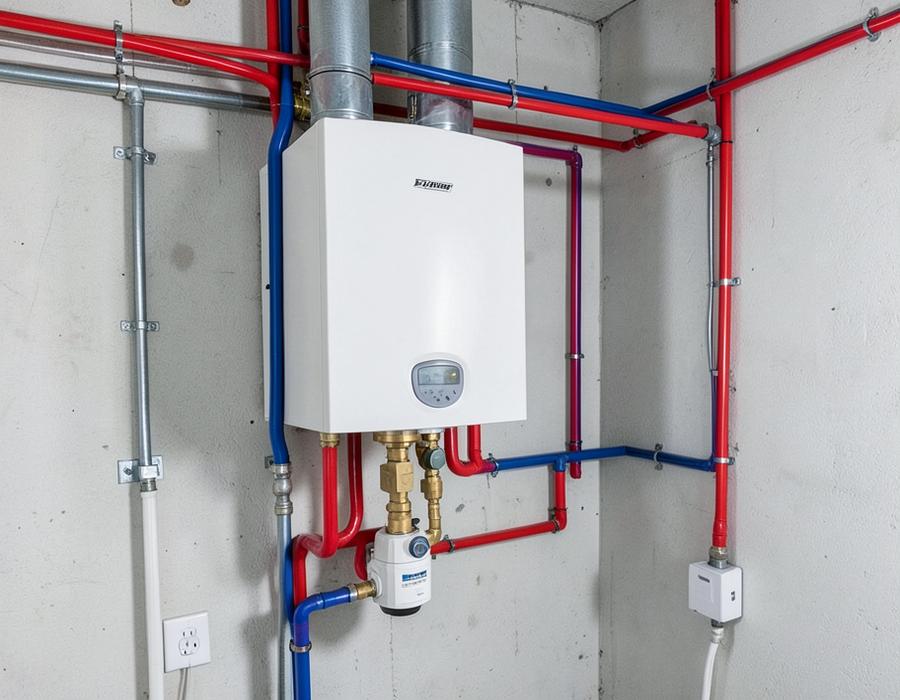
If your home has lost heat during cold weather, perform these low-risk visual checks before service arrives. Do not attempt internal mechanical repairs or remove equipment panels:
- 1Confirm Thermostat Settings: Verify that your thermostat is set to "HEAT" mode and the setpoint temperature is set several degrees above the current ambient room temperature. If the digital display is completely blank, replace weak or dead batteries.
- 2Note Any Visible Error Code: On modern condensing boilers or combination units, look at the digital readout screen and note any flashing error or fault code. Having this code ready when you speak with dispatch helps our technicians understand the system condition. Do not open or dismantle equipment.
- 3Check Affected Heating Zones: Walk through your home to check whether the entire property is without heat or if only one specific room or floor is cold. A single cold zone often indicates a zoning valve or isolated loop issue, while a whole-house outage points toward central burner or power concerns.
- 4Keep the Equipment Area Clear: Ensure the mechanical room floor and the clear workspace around your boiler are unobstructed by storage boxes, furniture, or laundry so the technician can safely access all components.
- 5Call 24/7 Professional Dispatch: Call our emergency heating line at (877) 570-8952. If you suspect plumbing pipes have begun to freeze or burst due to loss of heat, our frozen pipe repair team is on call to protect your property.
Do You Have a Boiler or a Furnace?
Homeowners frequently use the terms "boiler" and "furnace" interchangeably, but they are completely different mechanical systems that require different diagnostic procedures, parts, and maintenance:
Hydronic Boilers (Water Heating)
If warmth is distributed through copper pipes connected to metal fin-tube baseboards along your walls, cast-iron radiators, or radiant in-floor tubing, your property uses a hydronic boiler. Heated water or heat-transfer fluid circulates through closed pipe loops to deliver radiant and convective heat. You are on the right page for boiler service and repairs.
Forced-Air Furnaces (Air Heating)
If heat enters your rooms as warm air blowing out of sheet-metal ductwork registers or grilles located in the floor, wall, or ceiling, your property is heated by a forced-air furnace. A furnace heats ambient air and circulates it using an electric blower fan. If your home uses a forced-air furnace, visit our dedicated furnace repair services.
Common Boiler Problems We Diagnose & Repair in Anchorage
A hydronic boiler is an interconnected mechanical system combining fuel combustion, water circulation, electrical relays, and pressure controls. Our technicians evaluate and repair the core mechanical issues that disrupt home heating:
No Heat & Burner Ignition Lockouts
When a boiler fails to ignite or continuously shuts down after starting, the issue may involve safety limit controls, ignition module failures, dirty flame sensors, or low water pressure triggering automatic safety shutoffs. A professional evaluation determines whether ignition components, electrical relays, or pressure safeguards require service.
Uneven Heating & Cold Baseboards
If the boiler operates but baseboards in certain rooms remain cold, circulation may be obstructed. This condition can be associated with trapped airlocks within the piping loops, a motorized zone valve that fails to open, or a circulating pump struggling to move water through the circuit.
Boiler Water Leaks & Pressure Loss
Water pooling under or around a boiler can originate from leaking pipe joints, deteriorated pump seals, a compromised expansion tank, or an activated safety pressure relief valve. Because ongoing leakage can damage flooring and cause system pressure loss that shuts down the burner, leaks require timely on-site inspection.
Circulator Pump & Zone Valve Problems
Circulator pumps are responsible for moving heated water through baseboard and radiant loops, while motorized zone valves regulate flow to distinct living zones. When pump motor windings wear, impellers seize, or zone valve end switches fail to signal the boiler, rooms lose heat even if the burner is capable of firing. Explore our broader heating services and radiant floor heating solutions.
Boiler Noise: Kettling, Banging & Gurgling
Unusual rumbling, banging, or bubbling sounds within a boiler or heating lines can indicate restricted water circulation, air trapped in the closed piping loops, or mineral scale accumulation inside the heat exchanger. Professional purging of air and component inspection restores quiet, balanced operation.
Experiencing a boiler malfunction or loss of heat? Call (877) 570-8952 for 24/7 heating dispatch in Anchorage.
Why Reliable Hydronic Heating Matters in Anchorage Winters
In Southcentral Alaska, extended periods of sub-zero cold place continuous demand on residential and commercial heating equipment. Reliable boiler operation is essential not only for household comfort but also for protecting building infrastructure:
- Continuous Cold-Weather Demand: Sub-zero winter weather requires heating systems to operate consistently to offset heat loss through foundation walls, windows, and unheated crawlspaces. Prolonged operation can accelerate mechanical wear on circulators, relays, and switches.
- Cascading Pipe Freeze Risks: In hydronic heating systems, copper water lines run along exterior walls and floor perimeters. When a boiler locks out during cold weather, indoor temperatures drop, which can increase the risk of both heating loops and domestic water lines freezing and bursting.
- Approved Heat-Transfer Fluids: To add a layer of freeze protection during winter storms or temporary electrical outages, some Alaskan hydronic systems use approved propylene glycol heat-transfer fluid. Periodic inspection ensures fluid condition and mechanical components remain reliable. Learn more about our scheduled heating maintenance services.
Boiler Repair vs. Replacement: Making the Right Decision
When a heating malfunction occurs, property owners deserve straightforward guidance on whether repairing the existing boiler or investing in equipment replacement makes the most practical and economic sense:
When Repair Makes Sense
- The boiler's heat exchanger and cast-iron block remain structurally sound and leak-free.
- The malfunction involves external modular parts such as circulators, zone valves, or igniters.
- The estimated repair cost is reasonable relative to the system's overall condition.
- The boiler has been maintained and has operated reliably between normal service visits.
When Replacement Is Recommended
- The cast-iron section or internal heat exchanger has cracked or developed internal leaks.
- Critical replacement parts are obsolete or no longer reasonably available.
- Repeated mechanical breakdowns cause frequent heating uncertainty in winter.
- You wish to upgrade to a modern high-efficiency condensing or combination heating system. Explore our water heater repair and replacement services for combi options.
We provide free quotes on equipment replacements, helping homeowners evaluate their heating options with clear information and no pressure.
Boiler Service Pricing & Verified Value
Heating repairs are stressful enough without surprise surcharges. Here is how our service pricing and customer policies are structured:
Boiler problems do not wait for business hours. We do not impose extra overtime surcharges for night or weekend heating service calls in Anchorage.
If diagnostic inspection reveals that your boiler has reached the end of its useful service life, we provide clear, free quotes on replacement equipment options.
Our technicians travel to your property, examine system symptoms, and explain the recommended repair scope before proceeding with work.
Save $25 OFF on your first plumbing or heating service with coupon code 907SAVE. View all active promotions on our coupons page.
24/7 Boiler Repair Across Anchorage & 50-Mile Radius
Our technicians provide residential and commercial boiler service across the entire Anchorage Bowl and surrounding communities within our verified 50-mile radius:
Frequently Asked Questions About Boiler Repair in Anchorage
- How can I tell if I have a boiler or a furnace in my Anchorage home?
- You can identify your heating system by how warmth is delivered into your living areas. If your home uses hot water circulating through copper fin-tube baseboards along the floor, cast-iron radiators, or radiant in-floor tubing, you have a hydronic boiler. If warm air blows out of sheet-metal ductwork registers or grilles in the floor, wall, or ceiling, you have a forced-air furnace.
- Why is my boiler running, but some rooms in my house are still cold?
- When a boiler fires up but individual rooms or zones remain cold, the issue typically involves heat distribution rather than heat generation. This situation may indicate an airlock in the heating loop, a motorized zone valve that failed to open, a circulator pump experiencing restricted flow, or a faulty thermostat. A professional inspection determines whether mechanical parts, zoning controls, or air removal are required.
- Is a leaking boiler considered an emergency?
- Yes. Any active water leak around a boiler requires timely attention. Leaks can cause electrical shorts, damage mechanical room subflooring, and lead to pressure loss that triggers a complete heating system shutdown. If water is pooling near electrical wiring, switches, or burner controls, or if your home is losing heat during cold weather, contact emergency heating service right away.
- Do you provide 24/7 boiler repair in Anchorage?
- Yes. 907 Heating and Plumbing provides 24/7 emergency heating service across Anchorage and the surrounding 50-mile service radius. Because sub-zero Alaska temperatures can cause indoor temperatures to drop and increase the risk of frozen plumbing pipes during a heating outage, our dispatch team is available day and night.
- Do you charge extra for boiler repair calls on nights or weekends?
- No. We maintain standard pricing with no extra charge for nights or weekends. Heating equipment failures happen unexpectedly outside normal business hours, and property owners receive our regular transparent pricing whether a service call occurs on a weekday morning, late at night, or over the weekend.
- When should an aging boiler be repaired versus replaced?
- Boiler repair is generally the most practical choice when the cast-iron block or heat exchanger is sound, and the issue involves external modular components like circulator pumps, zone valves, relays, or thermostats. Replacement is typically recommended when major internal heat exchangers have cracked, replacement parts are obsolete, or frequent winter breakdowns make continued repairs impractical. We provide free quotes on equipment replacements.
Need Help With a Boiler or No-Heat Problem?
When your heating system shuts down during cold weather, waiting until regular business hours is not an option. Our Anchorage technicians are on call 24 hours a day, 7 days a week to inspect, diagnose, and resolve your boiler issues safely.
$25 OFF
Your First Service
Use Code: 907SAVE
Don't wait until a small plumbing or heating problem becomes a big repair. Book your service today.
Book Your Service Now