
Water Filtration & Treatment Systems in Anchorage, AK
Whole-home sediment filters, catalytic carbon purification, ion-exchange water softeners, and reverse osmosis systems engineered to protect Southcentral Alaska homes from glacial silt, chloramines, and well water minerals.
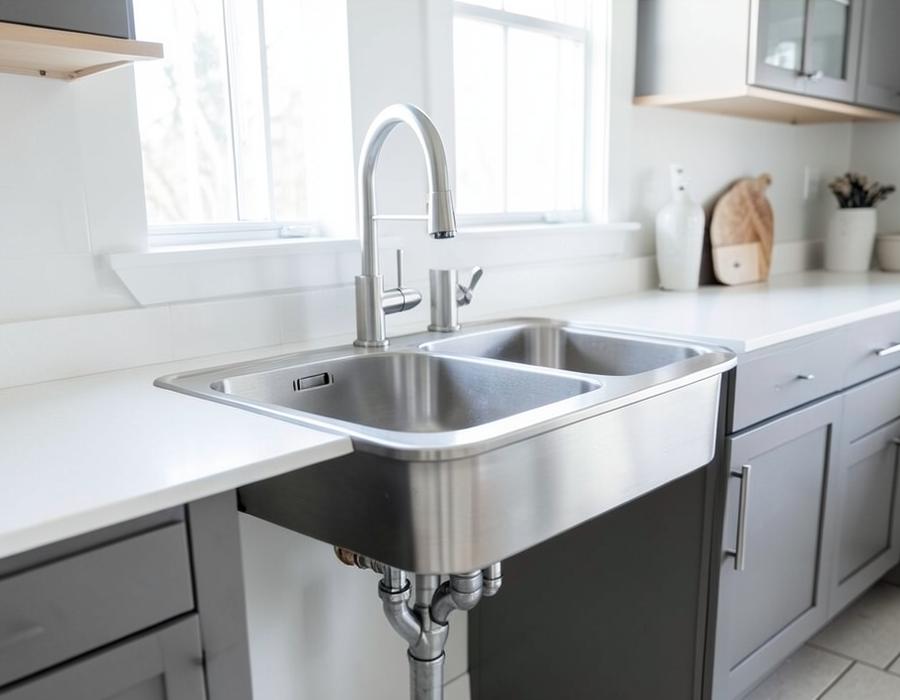
Clean Water Engineering
Engineered for Alaskan Water Profiles
From municipal AWWU water to private bedrock wells on the Hillside, our customized systems eliminate contaminants, prevent mineral scaling, and preserve appliances.
Whole-Home Clean Water Solutions Engineered for Southcentral Alaska
Every property's water supply presents unique chemical and mineral characteristics. We install customized water treatment solutions designed to address specific water quality challenges:
Glacial Silt & Particulate Shield
1. Whole-House Sediment Filtration
Glacial meltwater and deep aquifer wells in Southcentral Alaska carry abrasive micro-solids down to 5 microns. We install multi-gradient sediment cartridges and backwashing media tanks that protect valves, faucet aerators, and pump impellers from abrasive wear.
Chloramine, Odor & Chemical Adsorption
2. Catalytic Carbon Filtration
Targeting municipal chlorine and chloramines from AWWU distribution mains. Our catalytic activated carbon systems eliminate chemical odors, protect skin and hair, and prevent premature degradation of rubber plumbing seals and toilet flappers.
Hardness & Limescale Elimination
3. Ion-Exchange Water Softening
Hillside and Mat-Su well water frequently carries heavy calcium and magnesium hardness. Our high-efficiency ion-exchange softeners utilize metered digital regeneration valves to eliminate mineral scaling on boilers, tankless units, and fixtures.
Point-of-Use Drinking Purity
4. Multi-Stage Reverse Osmosis
Premium under-sink reverse osmosis (RO) systems featuring multi-stage sediment, carbon block, thin-film composite membranes, and polishing filters. Removes up to 98% of total dissolved solids (TDS), heavy metals, arsenic, PFAS, and microplastics.
Iron, Manganese & Low pH Balancing
5. Specialized Well Water Treatment
Air-injection oxidizing (AIO) media tanks eliminate orange rust and black manganese staining from bedrock wells without harsh chemicals. Calcite neutralizing tanks raise acidic water pH (below 6.5) to stop aggressive copper pipe pinholing.
Engineered Plumbing Integration
6. Custom Bypass Manifolds
Every system is plumbed with Type L copper or Uponor PEX-a featuring a 3-valve manual bypass loop. Maintain full household water pressure during cartridge changes and bypass treatment during exterior irrigation.
AWWU Municipal Water vs. Anchorage Hillside Private Well Water
The water treatment strategy for an Anchorage home depends heavily on the origin of the water supply. Here is how municipal distribution compares to private bedrock wells:
| Water Parameter | AWWU Municipal Supply (Eklutna Lake) | Private Bedrock Wells (Hillside / Mat-Su) |
|---|---|---|
| Primary Source | Eklutna Lake surface reservoir & deep municipal wells | Private deep bedrock aquifers (Hillside, Valley, Eagle River) |
| Disinfection Chemicals | Chlorine, chloramines, and chemical disinfectant byproducts | Zero chemical additives; variable natural mineral profile |
| Sediment / Particulates | Micro-fine glacial silt during spring breakup and main flushes | Abrasive sand, decomposed granite, bedrock silt, and grit |
| Mineral Hardness | Moderate to low mineral hardness (typically 30–60 mg/L) | Moderate to severe hardness (100–300+ mg/L calcium/magnesium) |
| Iron & Manganese | Trace levels within federal Safe Drinking Water standards | Elevated dissolved ferrous/ferric iron and black manganese |
| Recommended Solution | Whole-house catalytic carbon + sediment filter + point-of-use RO | AIO iron/manganese filter + ion-exchange softener + calcite neutralizer |
Protecting High-Efficiency Boilers & Tankless Water Heaters
In Alaska's severe sub-arctic climate, your home's hydronic boiler and domestic water heater work harder than almost any other appliance. Winter groundwater enters Anchorage homes at bone-chilling temperatures between 34°F and 38°F, requiring heating systems to generate a massive 80°F to 90°F temperature rise.
When untreated hard water is heated across these intense thermal gradients, calcium and magnesium minerals precipitate instantly onto heat exchanger surfaces. A layer of limescale just 1/16th of an inch thick reduces thermal transfer efficiency by over 10%, forcing your heating equipment to consume significantly more fuel. Over time, limescale creates localized thermal hotspots that crack copper heat exchangers and cause premature tank failures.
Scale-free heat exchangers transfer heat instantly, keeping utility bills low all winter.
Many boiler and tankless manufacturers exclude mineral scale damage from standard equipment protection coverage.
Related Mechanical Services
Water quality directly impacts every pressurized plumbing line and heating system in your home:
Our Professional Water Filtration Installation Process
We follow a disciplined, engineering-focused process to ensure your water filtration system is properly sized, cleanly piped, and reliable:
On-Site Water Diagnostic & Flow Evaluation
We test incoming static water pressure, measure peak household flow rates (GPM), and evaluate water quality parameters including hardness, TDS, iron, and pH to understand your water profile.
Custom System Sizing & Media Selection
We calculate exact tank diameters, valve flow capacities, and micron ratings to ensure your filtration equipment handles simultaneous showers and appliances with zero noticeable pressure loss.
Plumbing Integration & Bypass Loop Installation
Plumbed with durable Type L copper or PEX-a piping. We install a full 3-valve bypass loop around all primary equipment for uninterrupted home water access during routine servicing.
Commissioning, Pressure Check & Maintenance Plan
We purge air, cycle digital control valves, verify downstream water pressure, label equipment with installation dates, and establish a clear cartridge replacement schedule for your home.
Water Softener & Treatment Sizing Calculators
Calculate grain capacity requirements for ion-exchange water softeners based on family size and GPG hardness, or estimate pure water daily output from multi-stage reverse osmosis systems.
Protecting Black Fixtures from Scale
How hard water minerals etch and stain modern matte black plumbing fixtures and how soft water preserves finishes.
Read Fixture Care Guide →Cleaning Scaled Toilet Rim Jets
Techniques to dissolve calcium crust and hard water scale that restrict toilet flushing velocity.
Read Jet Cleaning Guide →Repiping Scaled Domestic Lines
When decades of mineral build-up and rust choke internal pipe diameters, whole-house Uponor PEX-A restores full flow.
View Repiping Solutions →Private Well & Municipal Filtration Districts
Water chemistry varies dramatically across the Anchorage Bowl and Mat-Su Valley:
Anchorage Hillside
Private bedrock wells with iron, manganese staining, low pH acidity, and high hardness.
Palmer, AK
Glacial outwash gravel aquifers with high calcium, fine silt, and agricultural mineral run-off.
Wasilla, AK
Deep residential wells requiring twin-tank water softeners and multi-stage sediment filters.
Peters Creek & Chugiak
Chugach mountain aquifers with seasonal glacial runoff, arsenic testing, and UV disinfection.
Frequently Asked Questions About Anchorage Water Filtration
Common questions regarding municipal water treatment, private wells, and filtration maintenance in Southcentral Alaska.
- Does Anchorage municipal tap water need to be filtered?
- While Anchorage Water and Wastewater Utility (AWWU) delivers water that meets federal Safe Drinking Water Act standards from Eklutna Lake and municipal wells, many Anchorage residents install whole-house carbon filtration to remove residual chlorine, chloramines, and chemical tastes, as well as cartridge sediment filtration to capture fine particulate matter and protect delicate plumbing fixtures from abrasive wear.
- How does hard well water affect plumbing fixtures and boilers in Anchorage?
- On the Anchorage Hillside, in Eagle River, and throughout the Mat-Su Valley, private wells frequently extract water with elevated calcium, magnesium, iron, and manganese. When this water is heated in boilers or tankless water heaters, dissolved minerals crystallize into hard limescale, insulating heating elements, reducing flow rates, increasing energy bills, and causing premature heat exchanger failure. An ion-exchange water softener or conditioning system neutralizes these minerals before they enter heating systems.
- What is the difference between whole-house filtration and reverse osmosis?
- A whole-house (point-of-entry) filtration system treats all water entering your residence at the main supply shutoff, protecting water heaters, dishwashers, washing machines, showers, and plumbing pipes from sediment, chlorine, and scale. A reverse osmosis (point-of-use) system is installed under a specific kitchen sink or dedicated faucet to purify drinking and cooking water through a semi-permeable membrane, removing up to 98% of total dissolved solids (TDS), heavy metals, arsenic, and nitrates.
- How often do water filter cartridges need to be replaced in Alaska homes?
- Sediment pre-filters in Anchorage typically require cartridge replacement every 3 to 6 months, depending on local sediment and silt levels in your water supply. Carbon block filters generally last 6 to 12 months, while reverse osmosis membranes have a service life of 2 to 3 years. Annual inspection of water softener brine tanks and valve heads ensures reliable regeneration and continuous mineral reduction.
$25 OFF
Your First Service
Use Code: 907SAVE
Don't wait until a small plumbing or heating problem becomes a big repair. Book your service today.
Book Your Service Now