
Leak Detection & Pipe Repair Services in Anchorage, AK
Pressurized water lines operate silently behind walls, under concrete slabs, and within unconditioned crawlspaces. In Southcentral Alaska's extreme climate, seasonal freeze-thaw cycles, sub-zero cold snaps, and seismic earth tremors place tremendous stress on piping. We provide comprehensive non-invasive leak detection and precision pipe restoration across Anchorage, Eagle River, and Chugiak.
Protecting Anchorage Properties from Hidden Leaks & Pipe Ruptures
Maintaining pressurized plumbing lines requires specialized technical expertise spanning leak localization, mechanical pipe joining, and long-term corrosion prevention. Explore our specialized services below:
Water Leak Detection & Slab Diagnostics
Non-Invasive Acoustic & Thermal ImagingPinpoint hidden water leaks inside walls, ceilings, unconditioned crawlspaces, and beneath concrete slab foundations without destructive exploratory demolition. We deploy electro-acoustic ground microphones and FLIR infrared thermography to isolate the exact leak coordinates within inches.
Pipe Repair & Sectional Replacement
Surgical Spot Repairs & Copper SplicingWhen an isolated pipe section suffers a localized split, pinhole leak, or joint failure, full system replacement is unnecessary. Our technicians execute surgical repairs using traditional sweat soldering, flameless ProPress crimping, and PEX-a transitions with dielectric unions to prevent galvanic corrosion.
Whole-House Repiping & PEX-a Upgrades
Modernizing Aging Galvanized & PolybutyleneFor older Anchorage homes experiencing chronic pinhole leaks, rusty water, or severe pressure drops, repiping provides a permanent solution. We replace failing galvanized iron and brittle polybutylene with freeze-resilient PEX-a barrier tubing, ensuring clean water and reliable pressure for decades.
Crawlspace & Frozen Pipe Restoration
Sub-Zero Thawing, Relocation & Heat TracingUnconditioned crawlspaces are extremely vulnerable to winter freeze events. When temperatures plummet to -20°F, exposed pipes freeze and rupture. We provide safe commercial pipe thawing, sectional pipe rebuilding, thermal re-sleeving, and self-regulating heat trace cable installation.
Understanding the Scope of Your Pipe Issue: Triage Matrix
Evaluating your symptoms allows our dispatch team to deploy the exact diagnostic equipment and technical specialists required for your situation.
| Observed Symptom | Primary Diagnostic Tool | Probable Root Cause | Recommended Service |
|---|---|---|---|
| Active Spraying / Dripping Pipe | Direct visual inspection | Freeze-split copper, physical puncture, or joint failure | Pipe Repair & Spot Fix |
| Spinning Water Meter (Fixtures Off) | Static pressure decay test | Pressurized hidden leak on main line or interior supply | Acoustic Leak Detection |
| Warm Floor Spot on Concrete / Tile | FLIR infrared thermal camera | Ruptured domestic hot line or in-slab hydronic heat loop | Slab Leak Detection |
| Rusty Water & Permanent Pressure Loss | Pipe material & volume audit | Heavy internal rust scaling in 50+ year old galvanized steel | Whole-House Repiping |
| Musty Odor / Pooling in Crawlspace | Moisture meter & acoustic wand | Pinhole leak, weeping solder joint, or frost-cracked fitting | Crawlspace Pipe Repair |
Why Anchorage Pipes Are Uniquely Vulnerable to Leaks & Ruptures
Plumbing systems in Southcentral Alaska face environmental stresses unlike almost any other region. Sub-zero winters, ground freezing, and tectonic tremors require specialized materials and installation techniques.
Deep Frost Penetration & Soil Heaving
Freezing temperatures penetrate up to 10 feet deep in Anchorage. As soil moisture freezes into solid ice lenses, frost heave exerts immense vertical and lateral shear forces on buried water lines, fracturing rigid pipes at joints.
Crawlspace Vulnerability During -20°F Cold Snaps
Many Anchorage homes are built over unconditioned crawlspaces. When outdoor temperatures plummet during winter cold snaps, frigid drafts freeze exposed supply lines. Water expands by 9% upon freezing, splitting pipes lengthwise.
Aging Mid-Century Galvanized & Polybutylene Lines
Homes built during the 1960s–1980s contain aging galvanized steel or defective polybutylene piping. Galvanized pipes choke with internal rust scaling, while polybutylene becomes brittle, causing unprovoked, catastrophic fitting blowouts.
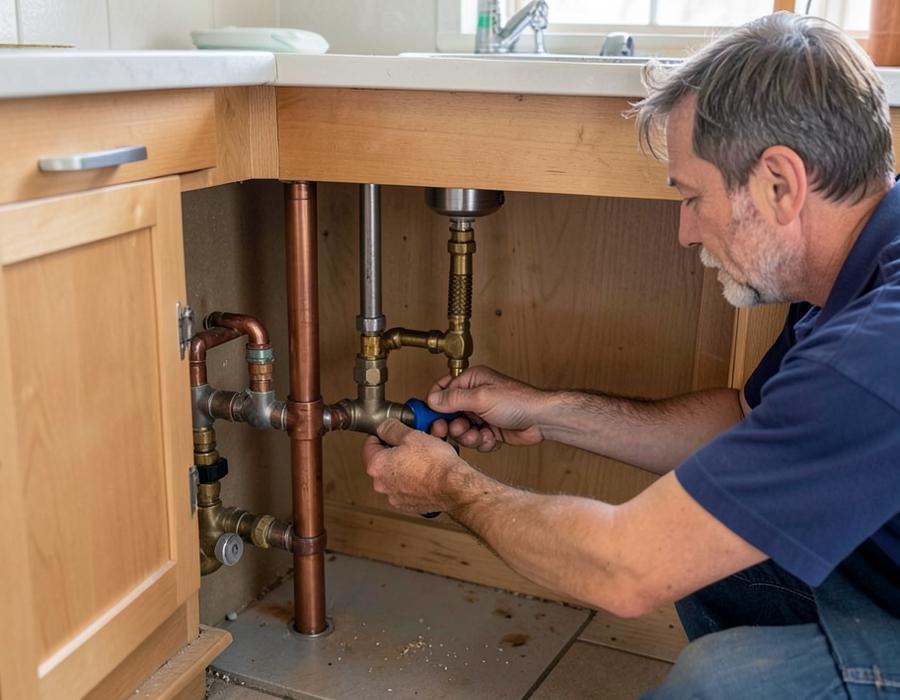
Engineered for Alaskan Winter Durability
From non-invasive acoustic diagnostics to freeze-expansion PEX-a retrofits and dielectric transition unions, our solutions ensure lasting protection.
Our 4-Stage Protocol: From Discovery to Permanent Repair
A disciplined workflow designed to minimize property disruption, control repair costs, and deliver permanent pressure integrity.
Non-Invasive Locating
Acoustic ground listening and thermal FLIR cameras pinpoint exact coordinates without exploratory wall damage.
Surgical Access
We isolate water flow and make small, precise rectangular access cuts directly over the defect to preserve wall finishes.
Engineered Repair
Damaged sections are replaced using ProPress hydraulic crimping or PEX-a expansion fittings with dielectric isolation.
Pressure Testing
We perform a static hydrostatic pressure test, verifying zero pressure decay before closing any wall or floor cavity.
Need a Plumber or Heating Expert Right Now?
Call us anytime for fast, reliable service.
(877) 570-8952- No Overtime Charges for Emergencies
- Live Emergency Support
- Quick Response
Anchorage Leak Detection & Pipe Repair FAQ
Clear answers to common questions about water leaks, pipe failures, and repiping decisions.
- How do plumbers find a hidden water leak inside a wall or under a concrete slab?
- We use advanced non-invasive diagnostic equipment, including acoustic ground microphones that amplify the ultrasonic frequency of escaping pressurized water, high-resolution thermal imaging cameras that detect temperature variations caused by moisture, and digital pressure decay gauges. This allows us to locate the exact leak coordinates within inches without blindly knocking holes in drywall or jackhammering concrete slabs.
- When should I repair a leaking pipe versus repiping the entire house?
- A localized spot pipe repair is ideal if the pipe is relatively modern (such as copper or PEX in good condition) and suffered damage from an isolated incident like a nail puncture or localized freeze. However, if your home has original galvanized steel piping, failing polybutylene, or if you have experienced multiple pinhole leaks across different rooms, the pipe walls are deteriorating from the inside out. In that case, continuing to pay for multiple spot repairs is a temporary fix, and a whole-house repipe is the only permanent, cost-effective solution.
- What are the most common signs of a hidden plumbing leak in an Anchorage home?
- Common signs include an unexplained surge in your monthly AWWU water utility bill, the sound of running or hissing water when all fixtures are turned off, warm spots on concrete or tile floors, musty mildew odors in crawlspaces or basements, spinning flow dials on your water meter when no water is running, and unexplained drops in municipal water pressure.
- Can a leaking pipe freeze faster during an Anchorage winter?
- Yes. Leaks in unconditioned crawlspaces or exterior-facing walls introduce moisture that saturates surrounding fiberglass insulation. Wet insulation loses up to 90% of its thermal resistance (R-value), exposing the pipe directly to sub-zero drafts and significantly accelerating the rate at which standing water in the line freezes and bursts.
$25 OFF
Your First Service
Use Code: 907SAVE
Don't wait until a small plumbing or heating problem becomes a big repair. Book your service today.
Book Your Service Now