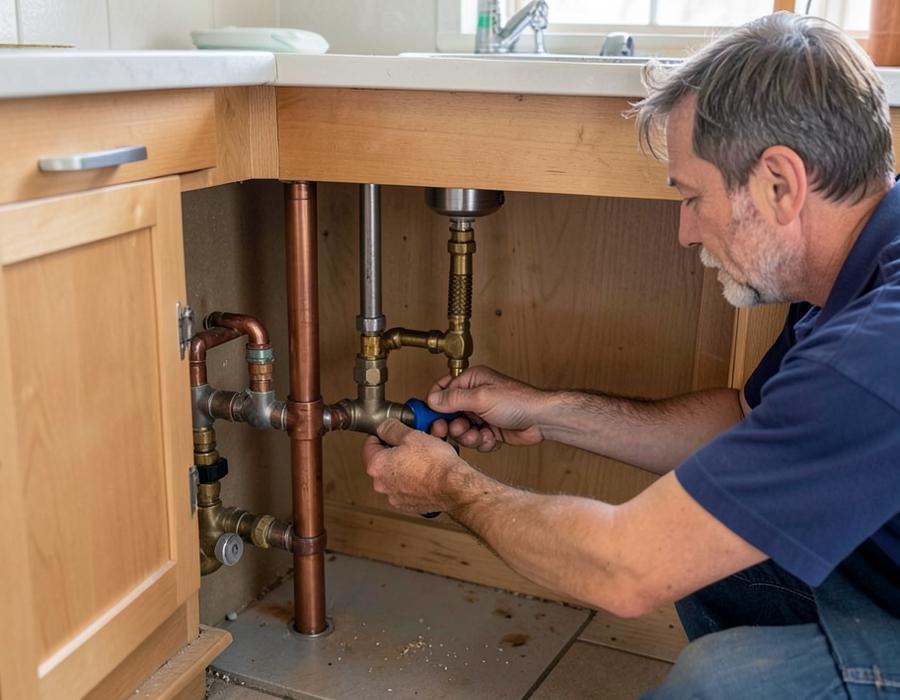
Hear that faint drip-drip-drip from under your kitchen sink? Planning to upgrade your bathroom faucet and dreading the thought of shutting off water to the entire house? These common homeowner headaches have a single, simple solution hiding in your cabinetry: the humble angle stop valve. Yet, most people have no idea what it is, how it works, or why it’s the most important plumbing fixture you’ve never thought about. Ignoring it can lead to catastrophic leaks, costly water damage, and DIY projects turning into emergency plumber calls.

This comprehensive guide from the experts at 907 Heating and Plumbing will demystify this critical component. We’ll explain exactly what an angle stop in plumbing is, why it’s your first line of defense against water disasters, and how to maintain it for a safe, worry-free home. Whether you’re a curious DIYer or simply want to be an informed homeowner, you’ll learn how to identify, use, and care for these essential valves.

What is an Angle Stop? The Basics of Water Control

In plumbing, an angle stop (also called an angle valve, supply stop, or shutoff valve) is a small, hand-operated valve that controls the water supply to a specific fixture—like a toilet, sink, dishwasher, or washing machine. It’s typically located where the water supply line (a flexible braided hose or rigid pipe) connects to the fixture, often hidden under a sink vanity or behind a toilet.

Its core purpose is localized water control. Instead of shutting off water to your entire home to repair a faucet, you simply turn the handle of the angle stop to stop water flow to that single fixture. This is crucial for maintenance, repairs, and in case of a leak.

Think of it like a circuit breaker for your plumbing: The main water shutoff is your home’s electrical panel, while the angle stop is an individual breaker for a single room. It allows you to isolate problems without disrupting the whole system.

Core Components:

  • Body: Typically made of brass, chrome-plated brass, or plastic.
  • Handle: A lever or oval knob for operation.
  • Inlet: Connects to the home’s pressurized water supply pipe (often 1/2″ threaded).
  • Outlet: Connects to the fixture’s supply line (usually via a 3/8″ compression outlet).
  • Stem/Seat: Internal parts that create a watertight seal when closed.

Why Angle Stops are Non-Negotiable for Your Home

You might not appreciate your angle stops until you desperately need one. Here are the key benefits that make them indispensable:

Emergency Leak Control

If a supply line or fixture bursts, a functioning angle stop lets you stop the flood in seconds, minimizing water damage. This is their most critical role.

Simplified Fixture Upgrades & Repairs

Replacing a faucet, toilet, or dishwasher becomes a straightforward DIY project when you can isolate the water. No need to coordinate with the whole household or run to the main shutoff in the basement.

System Integrity During Work

When a plumber is working on one part of your system, angle stops ensure water can stay on elsewhere in the house.

Fixture-Specific Maintenance

Allows you to drain a single line for winterization or to clear a clog without affecting other fixtures.

Types of Angle Stops: Materials, Styles, and Applications

Not all angle stops are created equal. Choosing the right type is key for longevity and performance.

1. By Operation Style:

  • Standard Compression Valve: Uses a rubber washer that compresses onto a seat. Common in older homes. Prone to wear and can be hard to turn if not exercised.
  • Quarter-Turn Ball Valve (Recommended): Features a brass ball with a port inside. A 90-degree turn (quarter-turn) from fully on to fully off. More reliable, less prone to seizing, and makes operation obvious (handle parallel to pipe = on, perpendicular = off). 907 Heating and Plumbing strongly recommends upgrading to quarter-turn valves.

2. By Material:

  • Chrome-Plated Brass: The professional standard. Durable, corrosion-resistant, and reliable. The brass body is robust, and the chrome plating offers a polished look under sinks.
  • Plain Brass: Often used in utility or unseen areas.
  • Plastic/PVC: Found in some low-cost new construction. Generally less durable and not recommended by professionals for long-term use.

3. By Outlet Connection:

  • Single Stop: Controls one supply line (common for toilets or dishwasher lines).
  • Dual Stop (or Twin Valve): Two separate valves on one body, controlling both hot and cold supplies for a sink. This is the most common type you’ll see under a bathroom or kitchen sink.

How an Angle Stop Works & Installation Overview

How It Works (Quarter-Turn Ball Valve)

Internally, a hollow ball with a port sits inside the valve body. When the handle is turned to the “on” position, the port aligns with the water flow, allowing water through. A quarter-turn rotates the ball so the solid side blocks the flow completely.

Professional Installation Steps (Why DIY is Risky)

While replacing an existing angle stop is a common DIY project, improper installation can lead to major leaks. Here’s how a pro from 907 Heating and Plumbing would handle it:

1
Tools & Materials: Adjustable wrenches (or basin wrench), quarter-turn angle stop, Teflon tape or pipe thread sealant, replacement supply lines, bucket/towels.
2
Shut Off Water: Turn off the main water supply to the house and open a lower faucet to depressurize the lines.
3
Remove Old Valve: Disconnect the supply line from the valve. Unthread the old valve from the supply pipe (the “shutoff” or “supply tail”). This is the critical step—if the pipe is corroded or over-torqued, it can snap.
4
Prepare & Install New Valve: Clean the supply pipe threads. Apply Teflon tape clockwise (2-3 wraps) or pipe dope. Thread the new angle stop on by hand, then tighten with a wrench—do not overtighten. Over-tightening can crack fittings.
5
Reconnect & Test: Attach the new supply line to the valve outlet. Slowly turn the main water back on. Check for leaks at the new connections. Operate the new valve several times.
CRITICAL SAFETY WARNING: If your water supply pipes are old galvanized steel, copper that is thin or corroded, or CPVC plastic that is brittle, attempting to remove an old valve carries a high risk of breaking the pipe. This can instantly escalate into a major repair requiring a professional plumber to replace pipe sections. If you are unsure, call a licensed plumber.

Common Angle Stop Problems & Solutions

Problem: The Valve is Frozen or Won’t Turn
Cause: Mineral buildup or corrosion inside, especially on old compression-style valves.
Solution: Do not force it! Forcing can break the valve stem. Try gently working the handle back and forth after applying a penetrating lubricant (like PB Blaster). If it doesn’t budge, it’s replacement time. This is a key sign you need a proactive upgrade.
Problem: Leaking from the Valve Stem (When Closed)
Cause: Worn-out internal packing or washer in a compression valve.
Solution: On some valves, you can tighten the packing nut slightly. Often, this is a temporary fix, and valve replacement is the permanent solution.
Problem: Leaking from the Supply Line Connection
Cause: Loose connection, damaged ferrule (compression ring), or missing/cross-threaded Teflon tape.
Solution: Tighten the connection gently with a wrench. If it persists, you may need to disconnect, inspect the ferrule and pipe threads for damage, and re-make the connection with fresh tape or sealant.
Problem: Water Continues to Flow After Valve is “Closed”
Cause: Debris preventing a full seal, or a failed internal mechanism (a “bad seat”).
Solution: The valve has failed internally and must be replaced immediately.

Cost Considerations: Professional vs. DIY Angle Stop Replacement

DIY Cost (Parts Only)

A quality quarter-turn brass angle stop costs $8 – $20. Supply lines are $10 – $25 each.

Professional Installation Cost

A licensed plumber typically charges $125 – $250+ to replace one or a set of angle stops. This includes labor, the service call, parts, and warranty.

When to DIY:

You are moderately handy, have a clear workspace, your existing pipes are in good condition (copper or sturdy PEX), and you have the proper tools. Replacing a working valve during a faucet update is a good starter project.

When to CALL 907 HEATING AND PLUMBING:

  • The valve is seized/corroded to the pipe.
  • The supply pipe is old galvanized, brittle CPVC, or appears damaged.
  • You don’t have a main water shutoff that works, or you’re uncomfortable using it.
  • You experience any leakage you cannot control after your repair attempt.
  • You simply value your time and want a guaranteed, code-compliant job done right.

Maintenance & Prevention Tips from the Pros

Essential Maintenance Tasks:

  • Exercise Your Valves: Every 6-12 months, slowly turn every angle stop in your home from fully on to fully off and back again. This prevents mineral deposits from seizing the mechanism.
  • Upgrade Proactively: If your home has old, multi-turn compression valves (especially with oval knobs), plan to replace them with quarter-turn ball valves before they fail. We recommend doing this at the time of any fixture remodel.
  • Label Them: Use a tag or piece of tape to label which fixture each valve controls (e.g., “Master Sink – Cold”).
  • Know Your System: Locate all your angle stops and your main water shutoff. Ensure every family member knows where they are and how to use them in an emergency.

Frequently Asked Questions (FAQ)

Q: How often should I replace my angle stops?
A: There’s no fixed schedule, but if they are over 15-20 years old, are the old compression style, or show signs of corrosion, plan to replace them. Proactive replacement during a renovation is always wise.
Q: Can I install an angle stop on PEX pipe?
A: Absolutely. This is very common. It requires a PEX-specific angle stop that is either crimped or clamped onto the PEX tubing using the proper tool, or a push-to-connect style valve. It’s not a standard threaded installation.
Q: My angle stop is leaking from the handle. Is this an emergency?
A: It’s a potential emergency. A small weep can quickly become a larger leak. You should immediately place a bucket under it, schedule a repair, and be prepared to shut off its dedicated water supply (or the main) if it worsens.
Q: What’s the difference between a straight stop and an angle stop?
A: The orientation of the outlet. An angle stop has an outlet that is 90 degrees to the inlet, directing the supply line straight down toward the floor/wall. A straight stop has an outlet in line with the inlet, directing the supply line horizontally. The choice depends on your under-sink plumbing configuration.
Q: Do building codes require angle stops?
A: Yes, virtually all modern plumbing codes (like IPC and UPC) require an individual shutoff valve on the water supply to each plumbing fixture and appliance. This is a non-negotiable safety and maintenance requirement.

Conclusion & Final Recommendation

Understanding what an angle stop in plumbing is empowers you as a homeowner. These small valves play an outsized role in protecting your home from water damage and making plumbing maintenance manageable. Remember their core function: control. They give you the power to isolate, repair, and upgrade with confidence.

Our final, expert recommendation from 907 Heating and Plumbing is this: Inspect your angle stops today. Turn them off and on. If they are stiff, leak, or are the old multi-turn style, prioritize upgrading them to reliable quarter-turn ball valves. While a straightforward swap can be a DIY task, never hesitate to call a licensed professional if you encounter corrosion, complex piping, or simply want the assurance of a leak-free guarantee. Your home’s plumbing is a system—investing in its critical control points is an investment in long-term peace of mind.